
The Barefoot Leather Library: Seven Types, One Batch
A barefoot factory specifies its outsole by last name and compound. Then it describes the upper — the part the foot actually touches — with one word.
A guide by TL San Martín, a tannery of origin in Elda (Alicante, Spain) since 1995, LWG Gold certified under the Leather Manufacturer standard — the only standard where a Gold medal exists.
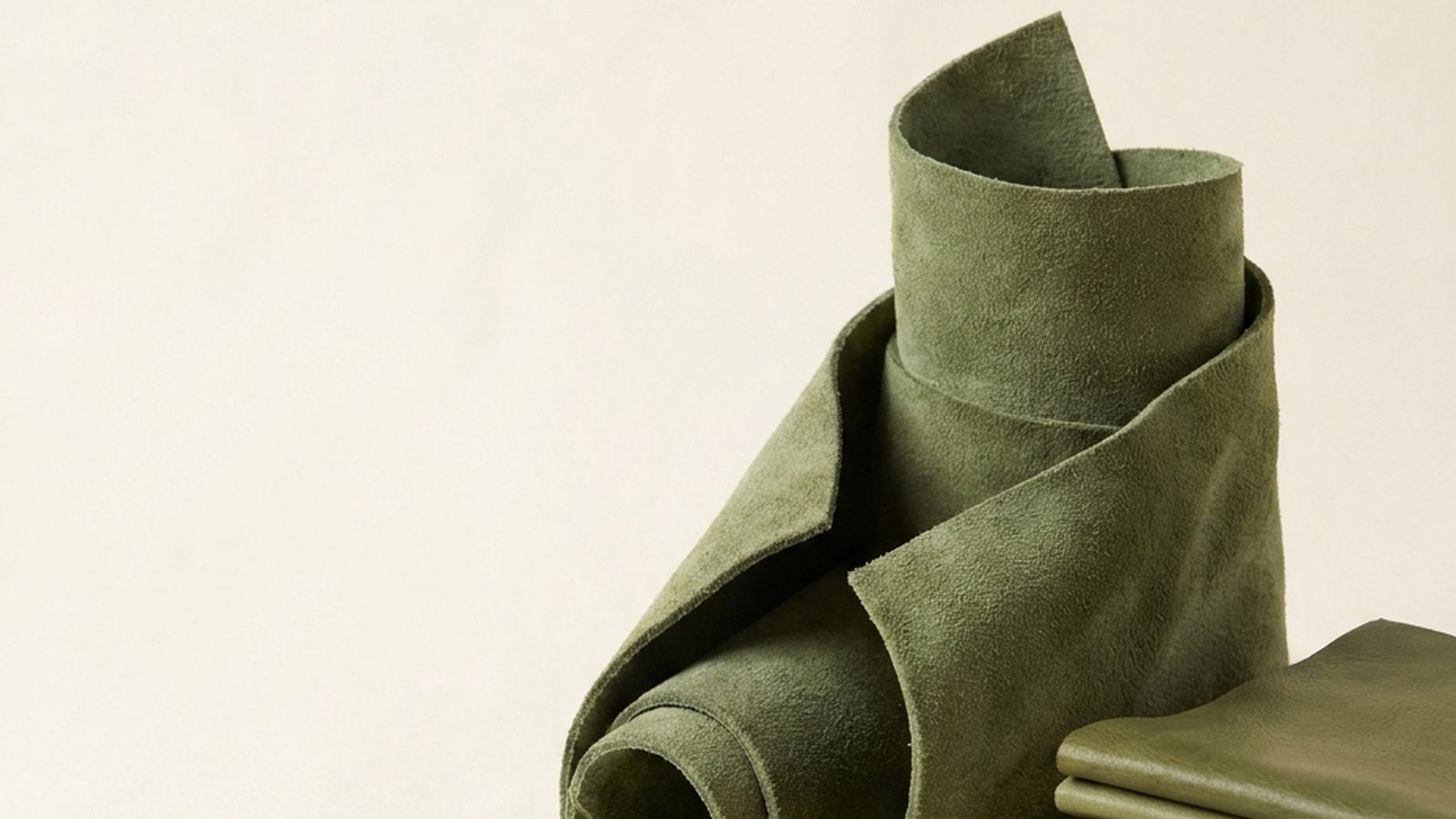
Seven types of leather selected and specified for barefoot construction, each with a stated substrate, a stated substance and its own colour card — and all of them cuttable from one reserved batch. Ordering them together is what makes the upper, the lining and the trim actually match inside the finished shoe.
Why does the upper get one word and the sole gets a data sheet?
Look at how the category specifies itself. A barefoot brand will name its outsole precisely, by last and by compound: natural rubber, SBR, thermoplastic elastomeric copolyester. Then the same tech pack describes the upper as leather. Sometimes suede. Occasionally floater leather, which sounds specific and is not — it names a look, not an animal, a tannage or a substance.
That is an adjective, not a specification, and it has a measurable consequence: nothing in the order stops the next lot from arriving different. It is the mechanism behind the most documented complaint in barefoot sourcing, which is that the third reorder no longer matches the launch photography. The fix is not a better supplier speech; it is five clauses written down before the order.
The seven types
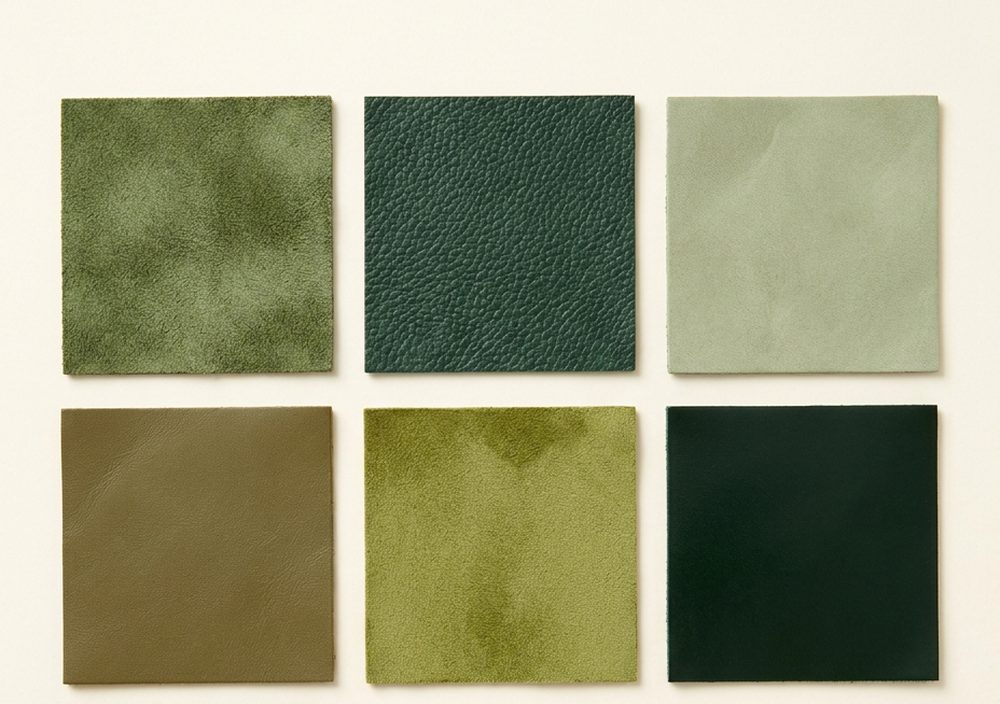
| Type | Substance | What it does in barefoot |
|---|---|---|
| Goat suede | 1,0–1,2 mm | The versatile one. Matte nap, breathes, forgives a tight crease |
| Floater calf | 1,1–1,3 mm | Soft natural grain with drape — the “floater” that most tech packs name and never specify |
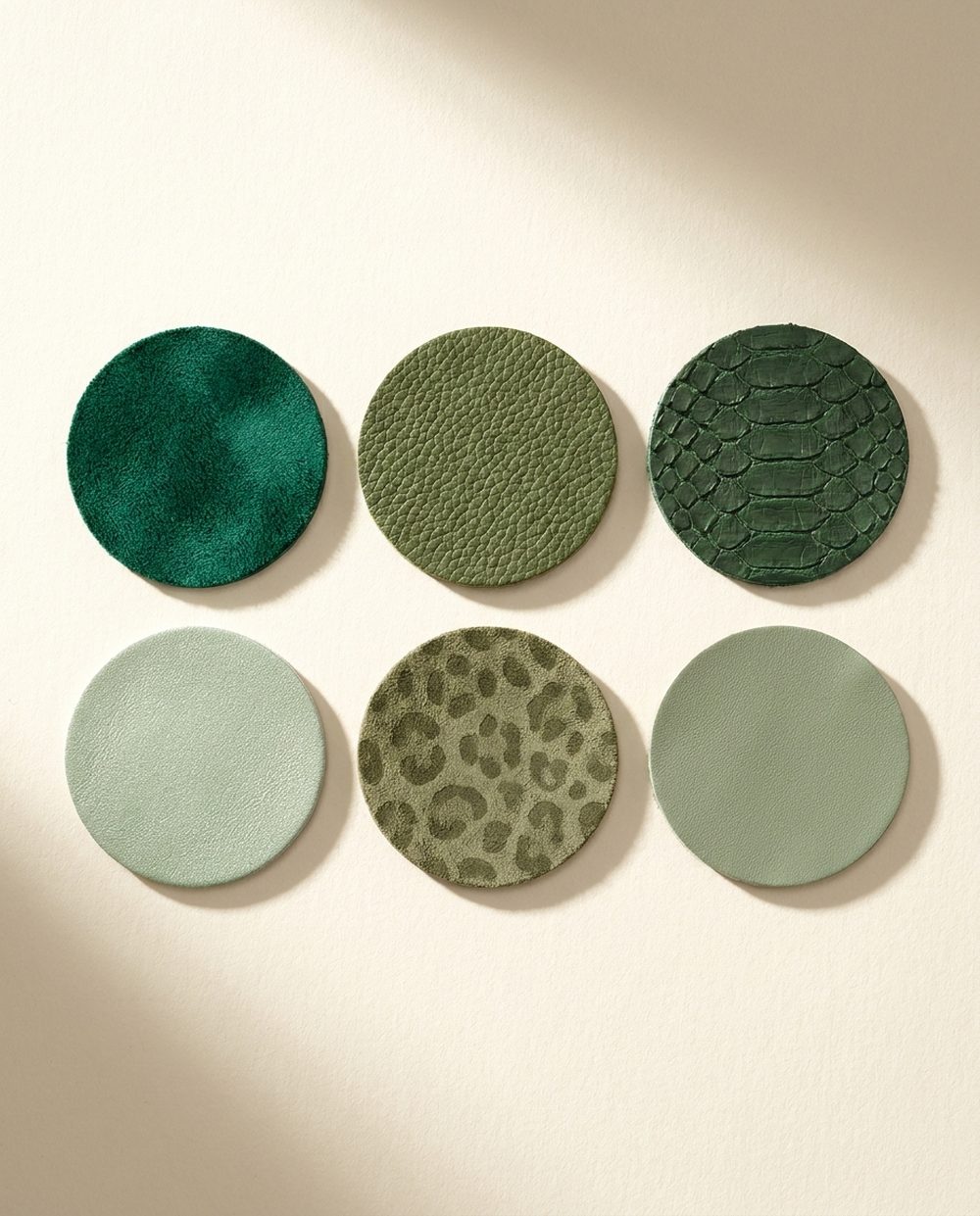
| Embossed python grain | 1,0–1,2 mm | Pressed into the hide itself: the effect is the leather and cannot delaminate |
| Super-soft calf | 1,1–1,3 mm | Maximum drape, for unstructured constructions |
| Pearlised metallic calf | 1,1–1,3 mm | Controlled shimmer that survives torsion, not just flex |
| Washed animal print | 0,9–1,1 mm | Lived-in rather than a flat printed film |
| Sheep lining | 0,6–0,8 mm | Lining. The piece in permanent contact with a bare foot |
Two of these deserve a note. The embossed grain is the honest answer to the effect question: it is the hide’s own surface pressed under a plate, so there is no separate layer to lift — unlike a laminated film, which dies at around 20.000 flex cycles. The full comparison is in animal print and metallic leather for barefoot sneakers. And the lining is the one most brands forget to specify at all, even though it is the only piece touching skin all day; the tests that matter there are rub fastness with alkaline sweat and water-vapour permeability, not shade. That is the lining specification.
What does “one batch” actually buy you?
Ordered together in one colour, the upper, the lining and the trim are cut from the same lot. Ordered from three suppliers, you get three near-misses of the same green inside one shoe, and the difference is visible in product photography long before a customer notices it.
There is a second effect, on price. A tannery cutting one article uses roughly 60–70 % of the hide. Cutting four or five articles of different sizes from the same colour lot pushes yield above 85 %, because the small pieces come out of the offcuts of the large ones. That shows up directly in the unit cost, and it is the reason a library is cheaper than a list.
The lot is then held 12–24 months so reorders land on the same finish recipe.
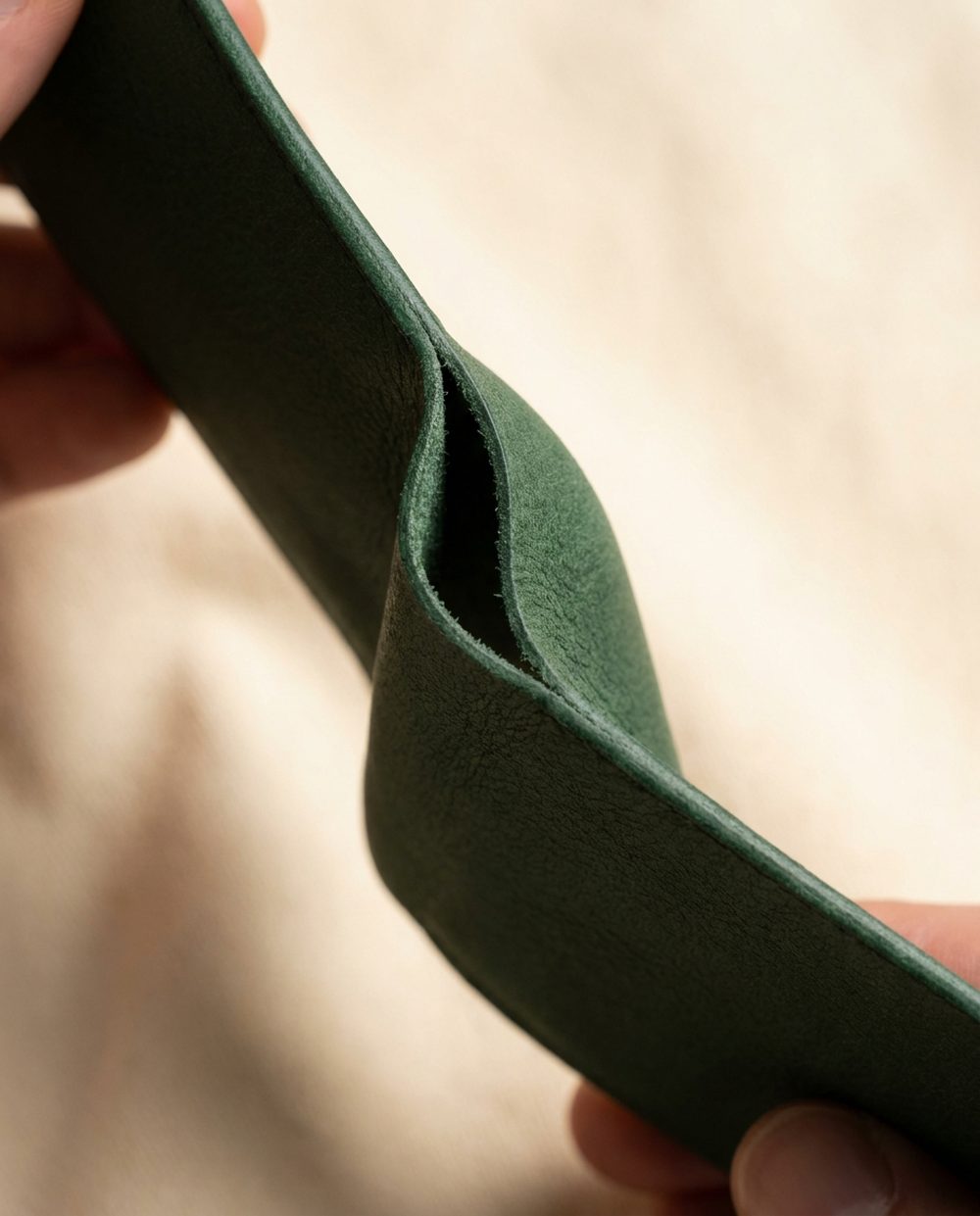
What does it cost to start?
The barefoot bottleneck was never price. It is the 1.000–5.000 pair run a shoe factory has to quote, which locks up 70.000–200.000 € of inventory before a brand sells a single pair. The material side does not have to work that way.
- No minimum on the hide. One skin is a real order for prototyping and salesman samples.
- A reserved production lot is roughly 100 m² per article and colour — about 200–300 pairs at 0,32–0,40 m² per pair with lining.
- Lab dip to your own Pantone at your own substance, dated, in 1–2 weeks. Production in 2–4 more.
If a full lot is still out of reach, several small brands can take different articles or colourways out of one drum run — the practical route behind low-minimum programmes. Post the article, substance, colour and quantity on the open B2B board under Materials and the brands solving the same problem that week will see it.
What compliance file comes with it?
This buyer checks chemistry before price, so the file is part of the product. Uppers and linings are available chrome-free and metal-free; metal-free is the claim worth making in barefoot, because the shoe is worn without socks. The regulatory calendar that actually binds — PFHxA at 25 ppb in EU footwear from 10 October 2026, Cr(VI) at 3 mg/kg under REACH — is set out in chrome-free leather for barefoot brands.
One caution on certificates, because it decides whether any of the above is enforceable: an LWG medal is awarded at the level of the lowest-scoring section, and traceability is scored separately as a percentage — it can read 0 % on a valid certificate. Tanning here is LWG Gold under the manufacturer standard, which is a different statement from a trader’s badge. The distinction is explained in tannery versus leather distributor.
Frequently asked questions
What substance should a barefoot upper be?
1,0–1,4 mm for the upper and 0,6–1,0 mm for the lining. Below 1,0 mm the upper loses shape recovery on a construction that has no toe puff and no counter; above 1,4 mm it stops folding on the tight radius a thin sole creates. Ask for the tolerance in mm and the measuring method (ISO 2589) — at this gauge a 0,1 mm drift is 8–10 % of the material.
Can I order all seven types in one colour?
Yes, and that is the point of the library. One colour matched across suede, floater, embossed and lining means upper, lining and trim come off the same lot. It is also where the yield gain lives: five articles from one colour lot instead of one.
What is the minimum order?
There is no minimum on the hide, so a single skin is a real order for sampling. A reserved production lot is roughly 100 m² per type and colour — about 200–300 pairs. Compare that with the 1.000–5.000 pairs a shoe factory has to quote.
Are these articles available chrome-free?
Uppers and lining are available in chrome-free and metal-free tannages. Metal-free is the claim worth making in barefoot: no socks, no sacrificial layer, and a lining in permanent contact with skin. Ask for the reports on your article and your colour, with a date.
Want the seven in your hand? Request swatches and we will send physical pieces plus a dated lab dip in your own Pantone and substance. If you would rather split a lot with other brands first, post it on the open B2B board under Materials.
Technical team at TL San Martín — tanning in Elda, Spain, since 1995. LWG Gold under the manufacturer standard.