
How to start a premium padel brand
You do not need a million or a catalogue. You need one product that stands apart, a run you can pay for, and a channel that pays you before you sell. This is the sequence.
A guide by TL San Martín, a tannery of origin in Elda (Alicante, Spain) since 1995, LWG Gold certified under the Leather Manufacturer standard.
Launch with a single leather product, run a short batch of 30 units with your logo on an already-developed product, and sell it through the B2B channel — clubs, tournaments, corporate gifting — before investing in anything of your own. Specific development makes sense from 300 units, not before. Our custom B2B prices run from 75 € to 180 € per unit, EXW.
The essentials, in six lines
- Minimum to customise
- 30 units, always in leather
- Target price
- cover 95 €/unit · bag or backpack 130 €/unit
- Range
- 75 € to 180 € per unit, depending on the product
- Sample
- 10–14 days with your logo
- Production
- 2–3 weeks from your sample approval
- Material
- leather tanned and finished by us in Elda. Always leather, never synthetic or “vegan leather”.
EXW prices, per unit, on a short run of our standard product customised with your logo. From 300 units we can look at a specific development instead of a short run.
Ask for a price and a sample →Padel went from a local sport to an industry in under a decade, and two things arrived with it: a flood of new brands and a product catalogue that is almost impossible to tell apart. Technical polyester bags, screen-printed logos, the same mould with four different names on it. That is not a brand. That is a logo stuck onto a product your competitor also sells.
This guide is not about materials — that is in what makes a padel bag luxury — it is about the business decisions of the first twelve months: which product you launch with, how much cash you tie up, what you charge and who you sell to.
What actually makes a padel brand premium?
Premium is not the price. It is that a verifiable reason to pay it exists, and that the player can point at it without you explaining. In padel the list of verifiable reasons is short: material, construction, provenance and service. Of the four, the only one visible from the other side of the court is the material.
So the first positioning decision is not the logo or the name: it is whether your product is made of something the market is not using. Padel equipment today is overwhelmingly synthetic. A well-executed piece in real leather is differentiation you do not have to argue for.
The honest counterpoint: premium also means you cannot compete on price or on range. If the plan is nine references at 5 € under the brand next to you, this guide is not for you.
Do you start with the brand or the product?
With one product. A hero product, finished, that you can photograph, send to an ambassador and put in a customer's hand inside two months. Identity, website and tone get built around something that exists; the other way round produces a beautiful brand book with nothing to sell.
For a brand starting out the natural candidate is not the bag: it is the racket cover. Lowest entry price, fastest purchase decision, and the article that works best as a gift and as a brand object. The padel bag is the product that consolidates a brand rather than launches it, because it triples the outlay and doubles the lead time.
Add a second article only once the first has sold. Two references and one colour can be run from a phone; six references in four colours need a warehouse and a system you do not have yet.
What does the first run really cost?
Our minimum order is 30 units, always in leather. That number exists so a new brand does not have to clear the 300, 500 or 1,000-unit minimums the usual channel asks for. We run short batches of our standard product, customised with your logo, so you can test the market with money you can afford to lose.
Our custom B2B prices run from 75 € to 180 € per unit, EXW, depending on the product. The arithmetic of a launch therefore looks like this:
| Launch scenario | Units | Product cost (EXW) |
|---|---|---|
| Racket cover | 30 | around 95 €/unit · 2,850 € |
| Padel backpack | 30 | around 130 €/unit · 3,900 € |
| Both references | 30 + 30 | 6,750 € |
EXW means freight, duty where it applies and insurance are yours from our door in Elda. Inside the EU that is a small percentage; outside it, work it out before you set your retail price rather than after. The six drivers behind the unit cost are broken down in leather padel bag cost per unit.
And the line almost nobody budgets: product is half the launch. The other half is photography, a website that takes money, packaging, and the stock that does not sell in month one. Set aside at least as much for that as for the goods.
Short run or your own development?
These are two different games and they are worth keeping apart.
| Short run of the standard product | Specific development | |
|---|---|---|
| From | 30 units | 300 production units |
| What is yours | The logo, the colour within the card, the packaging | The pattern, the hardware, the lining, the finish |
| Tooling and pattern investment | None | Yes, amortised over volume |
| Lead time | Weeks | Months |
| What it is for | Proving demand exists | Building a product nobody can copy out of the same mould |
The sensible sequence is the obvious one: short run to learn what your customer buys, own development once you know. If your brand grows, from 300 units we can put a specific development on the table — the programme is described in padel bag manufacturer and private label. Paying for your own pattern before you have sold 30 units is financing a guess.
How do you set the retail price?
With a multiple that survives the channel you are going to use, not the one you would like to use. Selling only from your own site, 2.5× landed cost leaves room for advertising, returns and a bad season. Going into shops or clubs that resell, you need room for the distribution discount and the multiple rises.
The classic mistake in premium padel is the opposite of what people expect: it is not pricing too high, it is pricing just about right. A leather product priced within touching distance of synthetic does not read as a bargain, it reads as doubt. If the product is well executed, the price has to confirm it.
Where do the first hundred units sell?
Almost never on your own website. The four channels that actually move a premium padel brand's first runs are:
| Channel | Why it works early | Typical order |
|---|---|---|
| Clubs | They buy for their shop and their members, and one or two people decide | 30 – 100 |
| Tournaments | They need a prize that does not look like merchandising, and they have a date | 8 – 30 |
| Corporate gifting | High per-head budget, low sensitivity to unit price | 50 – 300 |
| Direct to consumer | Full margin and your own customer data | 1 |
The first three are B2B, and they carry a decisive advantage for a brand with no cash: you are paid up front or on short terms against a closed order, instead of financing stock while you wait for a consumer. The club channel is also where the product gets seen — every member carrying your cover onto court is advertising inside the exact niche.
The first ninety days
| Weeks | What you do | What must exist by the end |
|---|---|---|
| 1 – 2 | Pick product and colour, request leather samples, settle the name | A material decision made with the leather in your hand |
| 3 – 4 | Physical sample with your logo; validate the logo on the real material | One unit you can photograph and show |
| 5 – 6 | Photography, pricing, packaging; talk to three clubs | A price and three live conversations |
| 7 – 10 | Production of the first run of 30 | Stock in your hands |
| 11 – 13 | Sell: club, tournament, own list | Real data on what sells and to whom |
The step most brands skip is the first one. Leather samples cost almost nothing and they prevent the expensive error: finding out with 30 units made that the colour is not the one you pictured. Request samples before you design anything around it. The range view for a first collection is in launching a padel bag brand.
Five mistakes that kill a new padel brand
1. Launching a catalogue instead of a product. Nine references is nine times the risk and a ninth of the marketing budget per reference.
2. Paying for your own development before the first sale. Your own pattern is the reward for having sold, not the requirement to sell.
3. Choosing the material from a photograph. Some leathers are spectacular at launch and mark within a season in a car boot. It is the one material decision you cannot delegate.
4. Ignoring the B2B channel. Clubs, tournaments and companies pay against an order. A new brand selling only to consumers finances its own stock.
5. Not being able to repeat the order. If the second batch is not the same colour as the first, you do not have a brand: you have a series of similar products. We tan and finish in-house, so colour is built to a reference and reproduced on reorders. Bought through an intermediary, that is not guaranteed.
Brands, clubs and workshops meet in Partners & factories on the open, free Business Board. Already specified your first run? Post it in RFQ · Production.
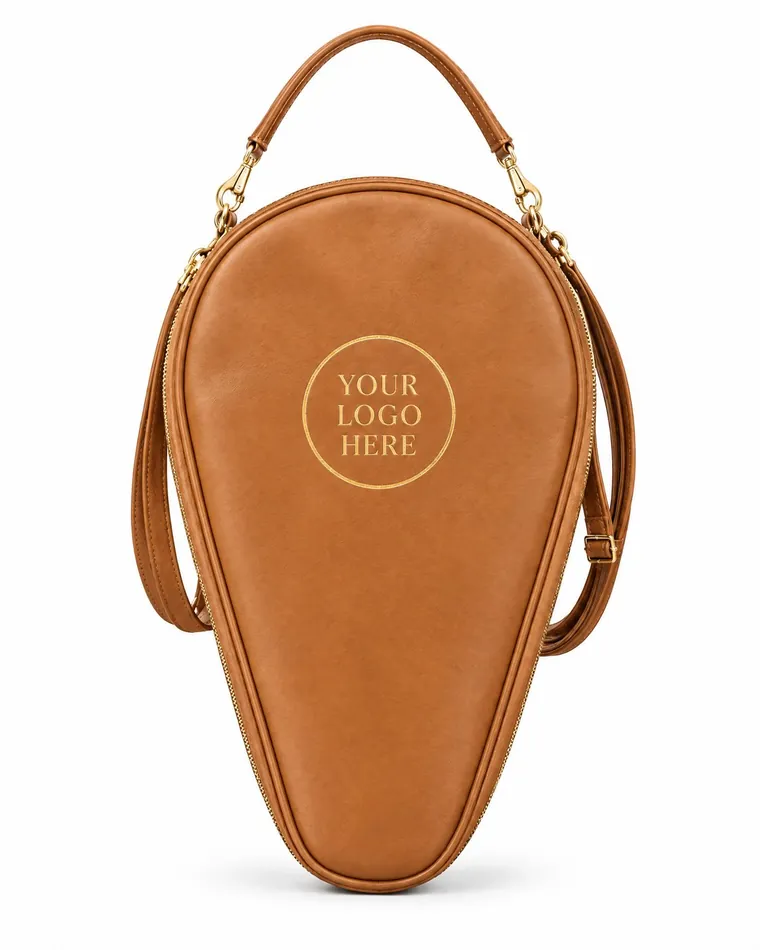
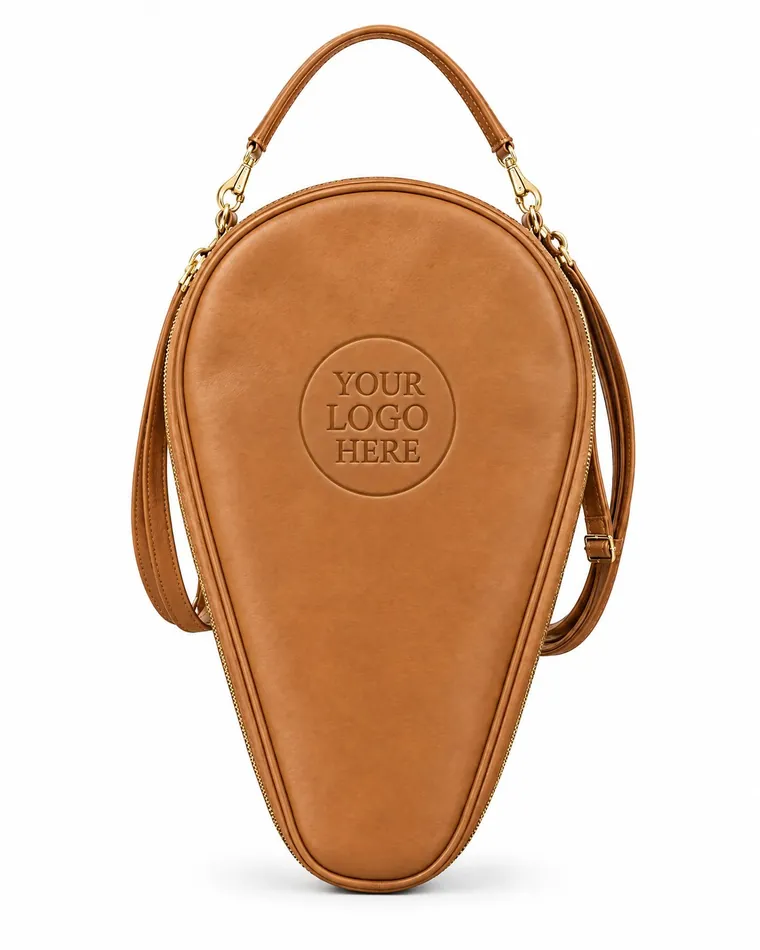
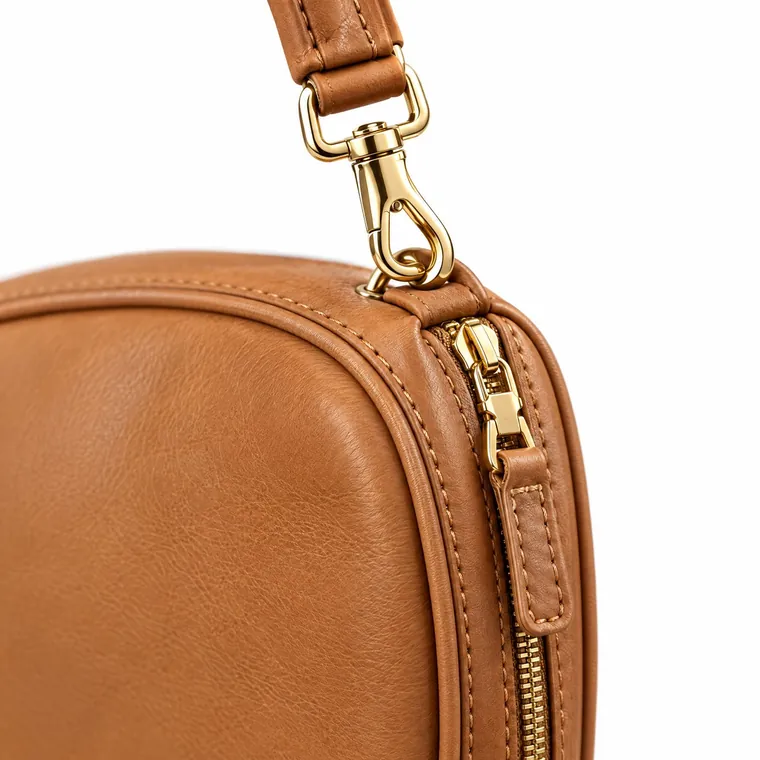
The real sample, photographed
Photographs of the TL San Martín production sample. Leather tanned and finished in Elda, sewn into a racket cover and customisable with a brand or club crest.




Frequently asked questions
What is the minimum order for a new brand?
30 units, always in leather. We run short batches of our standard product customised with your logo, precisely so a brand starting out does not have to clear the 300 or 500-unit minimums of the usual channel.
What does each unit cost?
Between 75 € and 180 € per unit EXW, depending on the product. The two usual starting references: the racket cover at around 95 € per unit and the padel backpack at around 130 €. A first run of 30 covers is 2,850 € of product cost.
Can I put my logo on from the first run?
Yes. Logo customisation is included in the short run of the standard product; you do not need volume to have your own brand on the product.
When does your own development make sense?
From 300 production units. Above that, your own pattern and hardware are amortised and it makes sense to build a product that exists in no other catalogue. Below it, a short run of the standard gives you the same commercial information for far less money.
Which product should you start with?
The racket cover. Lowest entry price, fastest purchase decision and the best club and tournament gift. The bag consolidates the brand, but it triples the outlay of a first run.
TL San Martín tans and finishes leather in Elda, Alicante, since 1995: LWG Gold under the Leather Manufacturer standard — the only standard under which a Gold medal exists at all; a Trader tops out at “Approved”. Minimum order 30 units in leather, customisable with your logo. Ask for a quote with the product and quantity and you get an EXW price and a lead time.